

VisionNav's Advanced Solutions for Auto Parts Logistics Transformation with AMR Robots
Automotive - Material Stacking

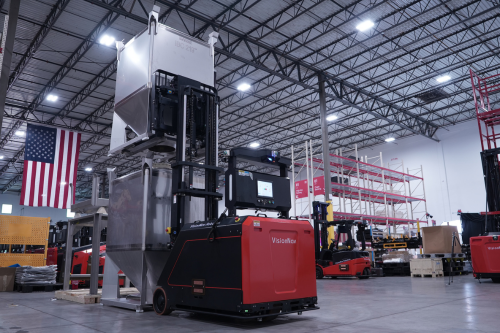
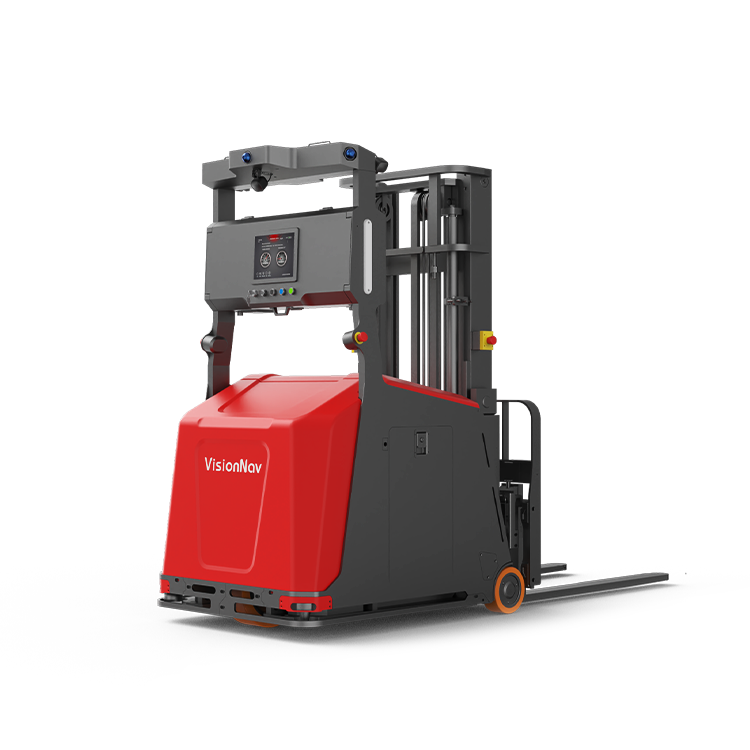
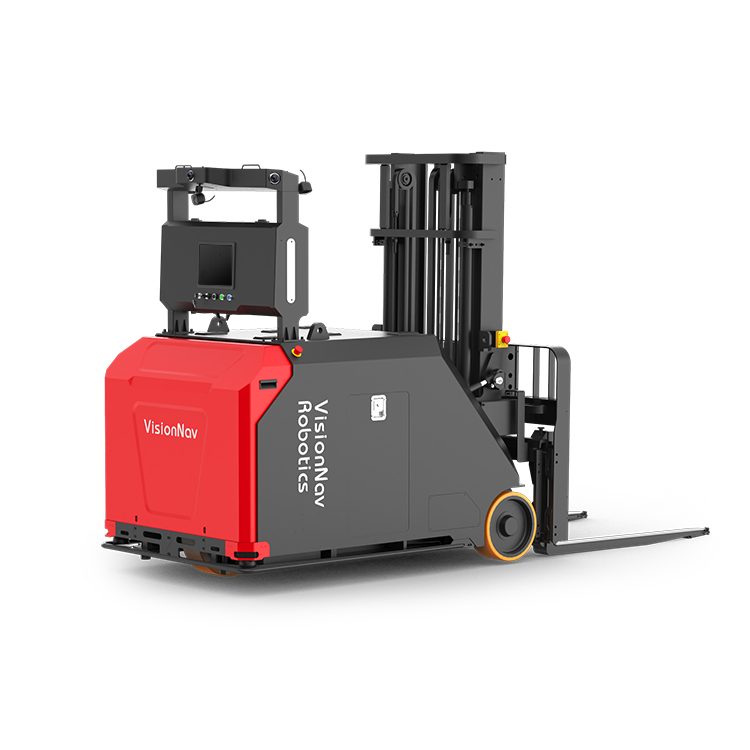
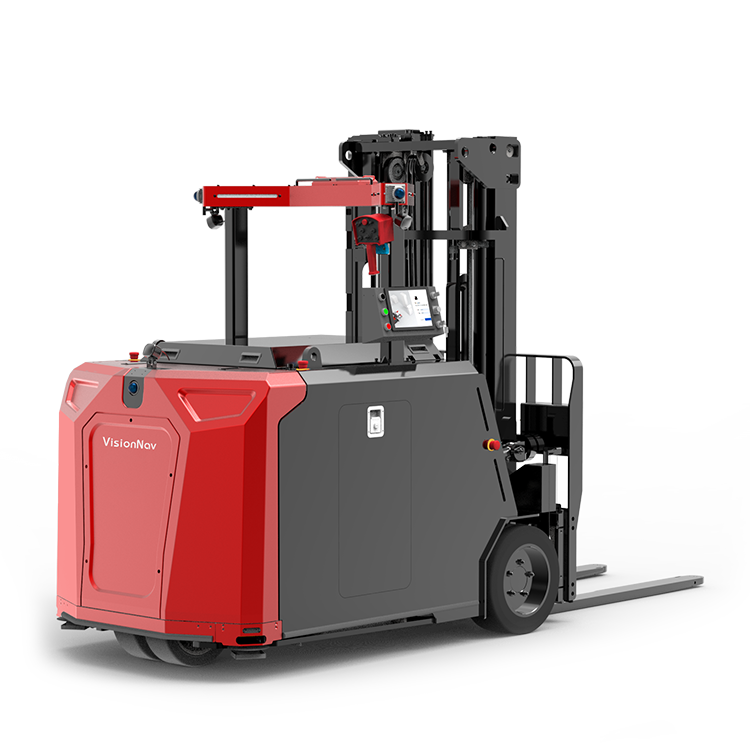
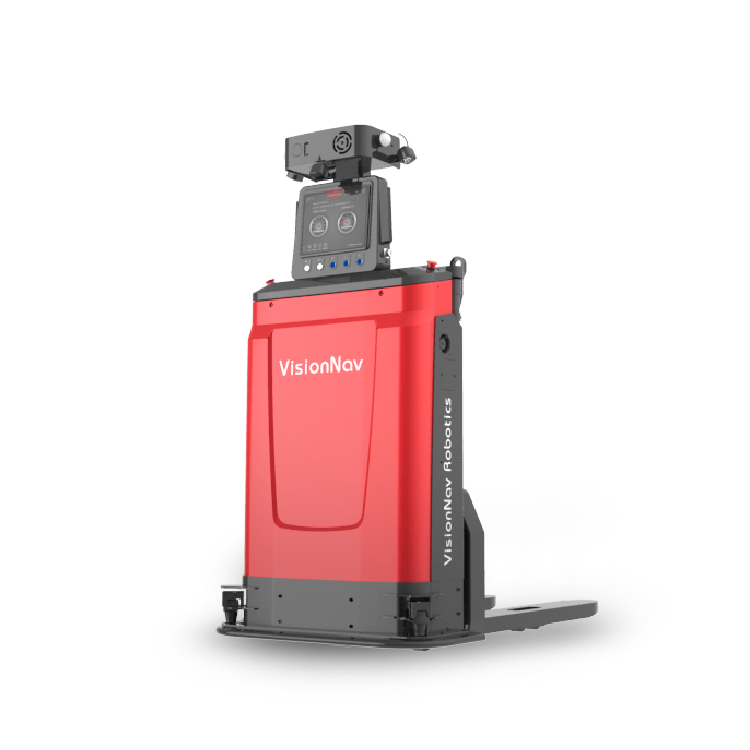
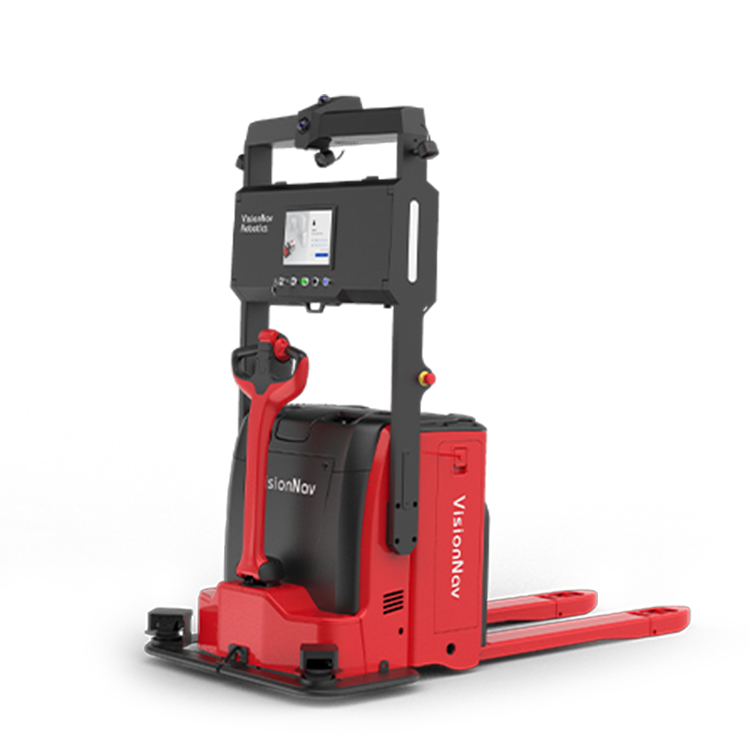
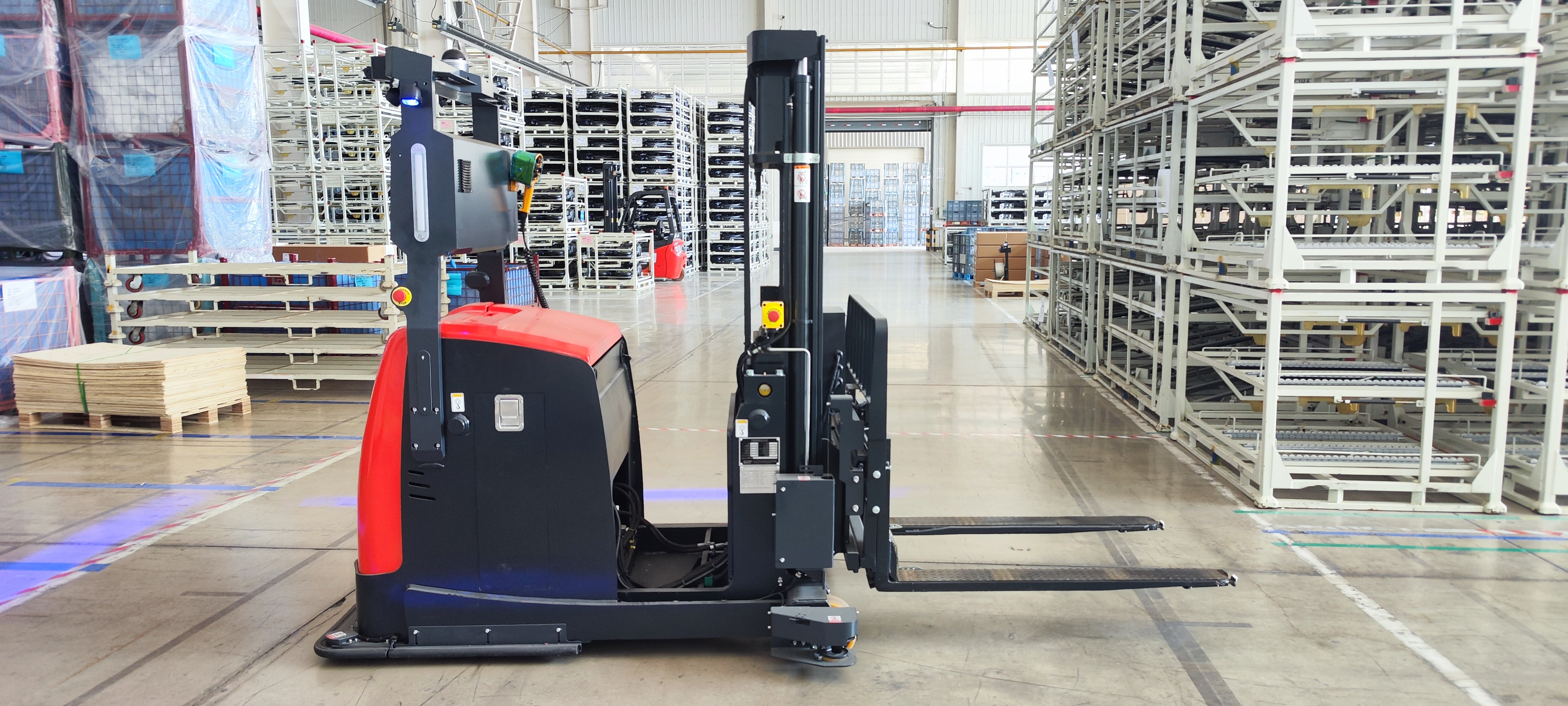
In automotive parts manufacturing, automating the transport and high-density stacking of finished goods cages has long been a critical challenge in achieving fully autonomous intralogistics. VisionNav Robotics' VNP15 Autonomous Counterbalance Stacker addresses this challenge through the integration of three core technologies: 3D laser navigation, and precision servo lift control.
At a leading automotive parts manufacturer, the VNP15 successfully automated four-layer stacking of finished goods cages and empty cage destacking, delivering a highly reliable, high-precision, and safe material handling solution for the automotive industry.
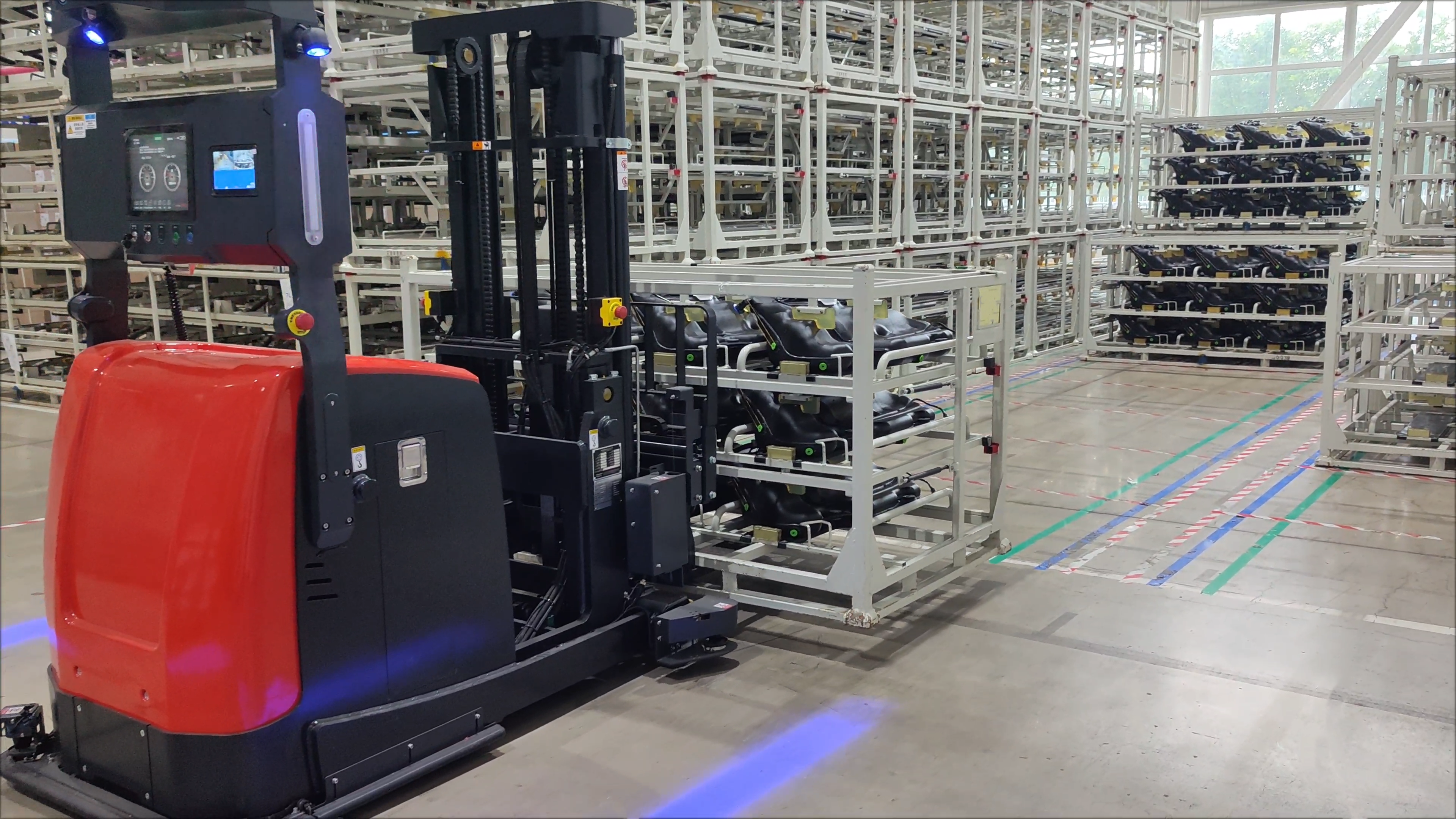
The project required autonomous transportation of finished goods cages from the production line, including full cage stacking, empty cage destacking, and continuous material circulation. The application presented several operational challenges:
Multiple carrier types: Three cage sizes (1800, 2200, and 2400 × 1200 mm) were used throughout the facility, each featuring narrow fork pockets that required highly accurate positioning.
The VNP15 utilizes 3D SLAM laser navigation, allowing deployment without facility modifications or reflective markers. The system rapidly maps the environment while providing millimeter-level localization.
An onboard 3D laser sensor accurately identifies cage feet, fork entry locations, and carrier dimensions, automatically adapting to multiple cage sizes ranging from 1800 mm to 2400 mm.
The system supports:
This enables reliable and consistent fork engagement across a wide variety of carrier types.
The project incorporates VisionNav's Smart Stacking Verification System, combining machine vision with deep learning algorithms to continuously analyze the alignment between the upper and lower cage support points before every stacking operation.
The system automatically determines whether stacking conditions are acceptable:
By verifying every placement before completion, the system helps eliminate stack misalignment, minimizes cage wear, prevents product damage, and significantly reduces the risk of collapsed stacks.
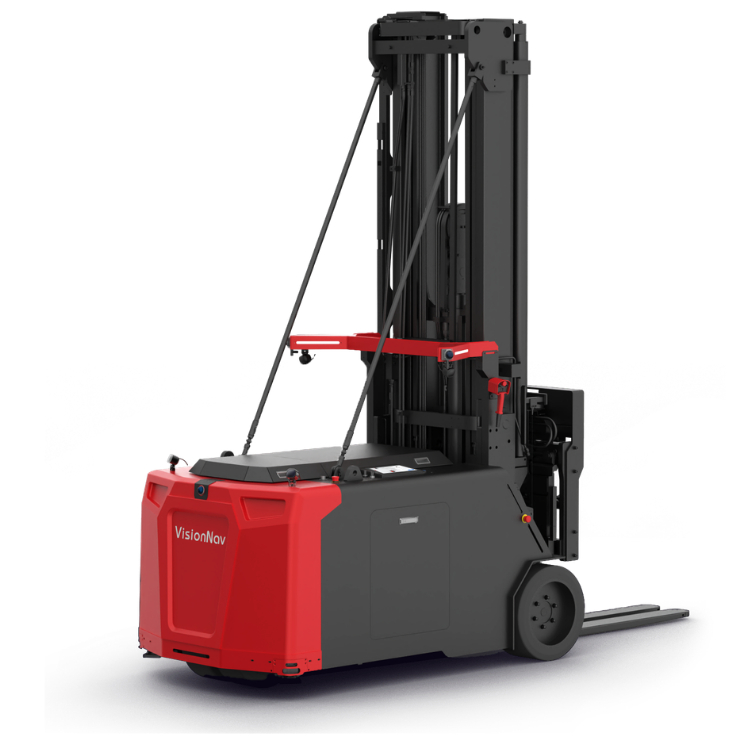
The VNP15 features a 1,500 kg rated payload and a 2,400 mm lift height, optimized for two-layer cage handling.
To achieve four-layer storage, the application employs a staged stacking strategy:
Throughout the lifting process, precision servo control ensures smooth elevation, accurate positioning, and controlled placement. Vertical pressure sensors verify that each cage is fully seated before the forklift releases the load, helping maintain proper alignment and stack stability while maximizing storage density.
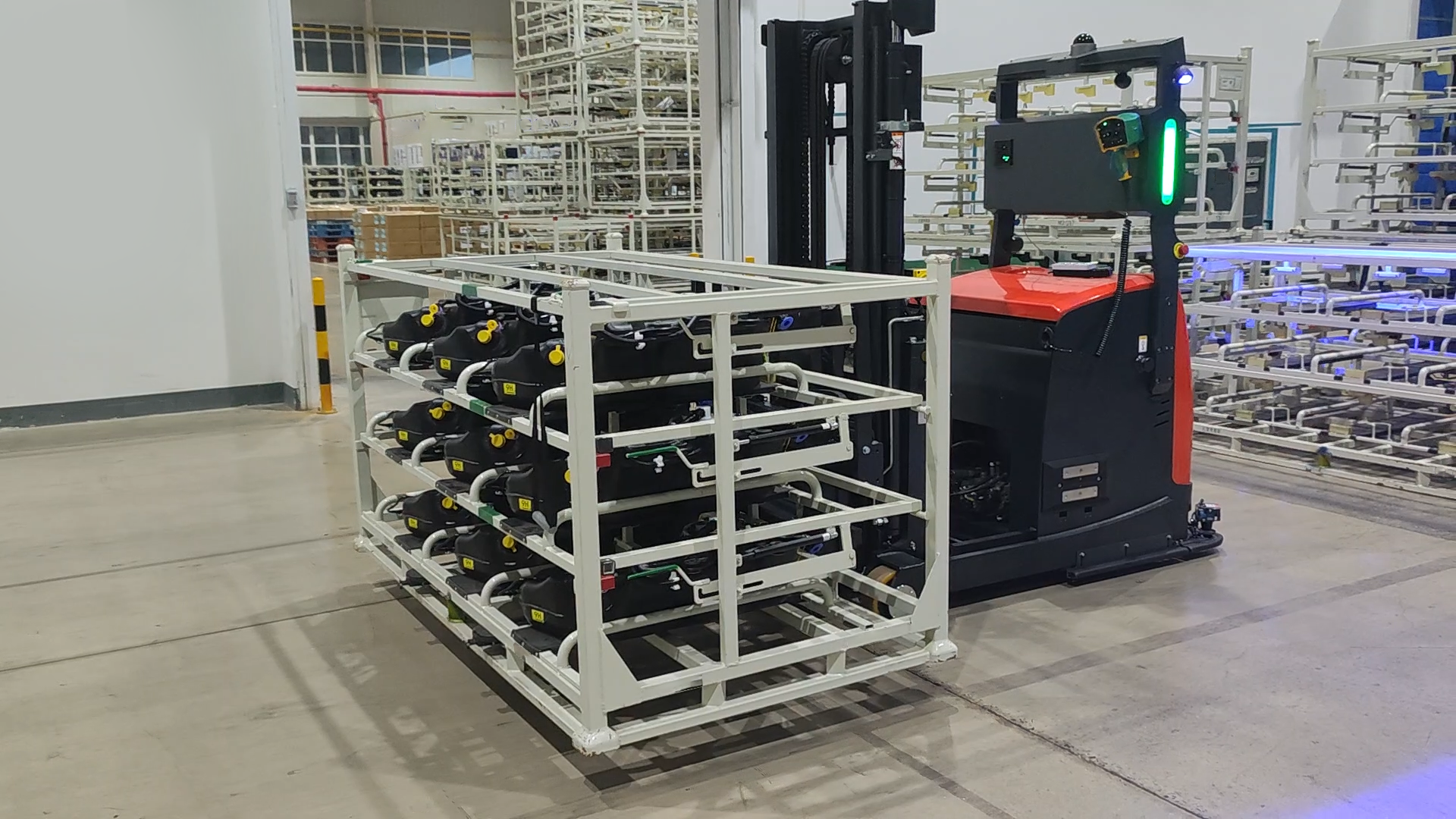
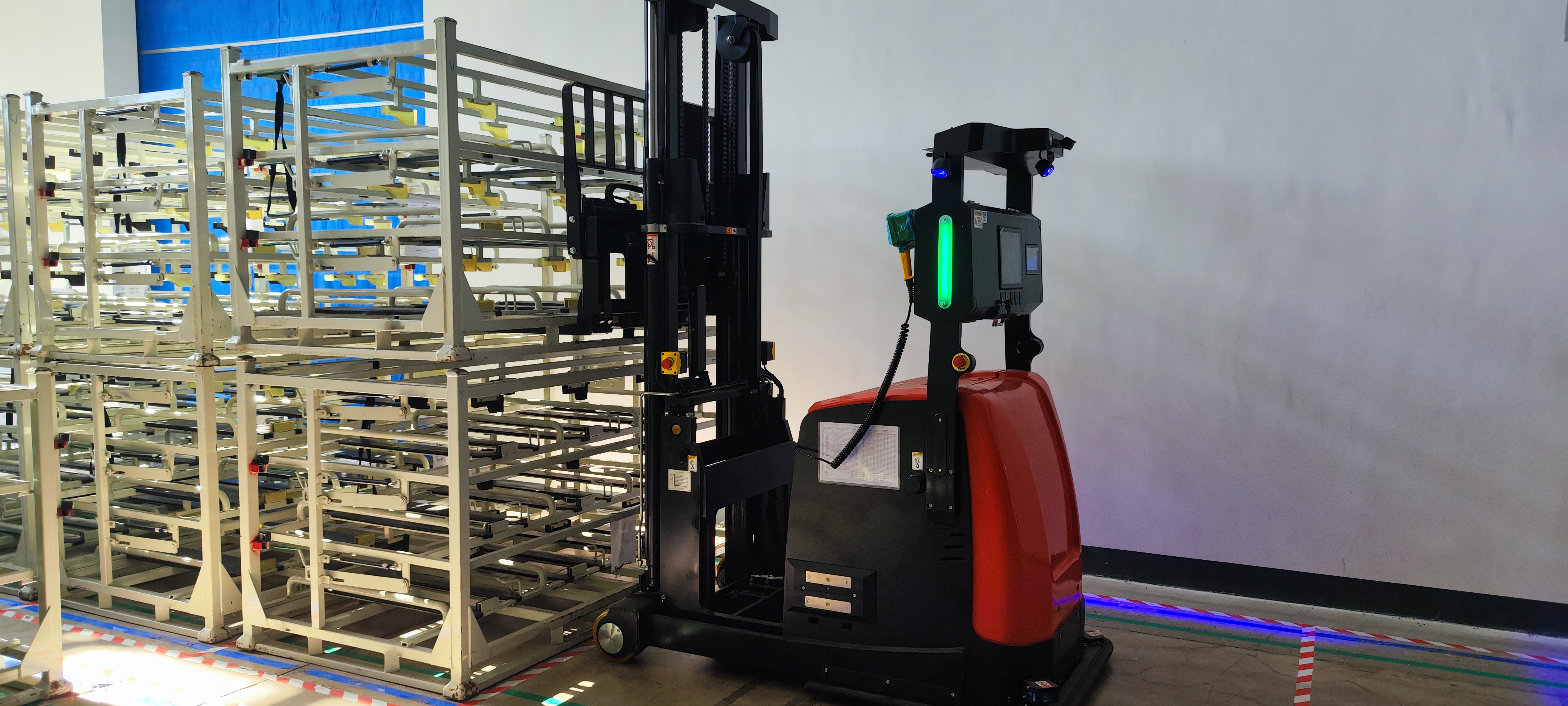
VisionNav Robotics continues to advance autonomous stacking technology through intelligent perception, precision motion control, and AI-driven verification systems. By delivering reliable, flexible, and highly accurate autonomous forklift solutions, VisionNav helps manufacturers streamline internal logistics while improving safety, operational efficiency, and warehouse utilization.