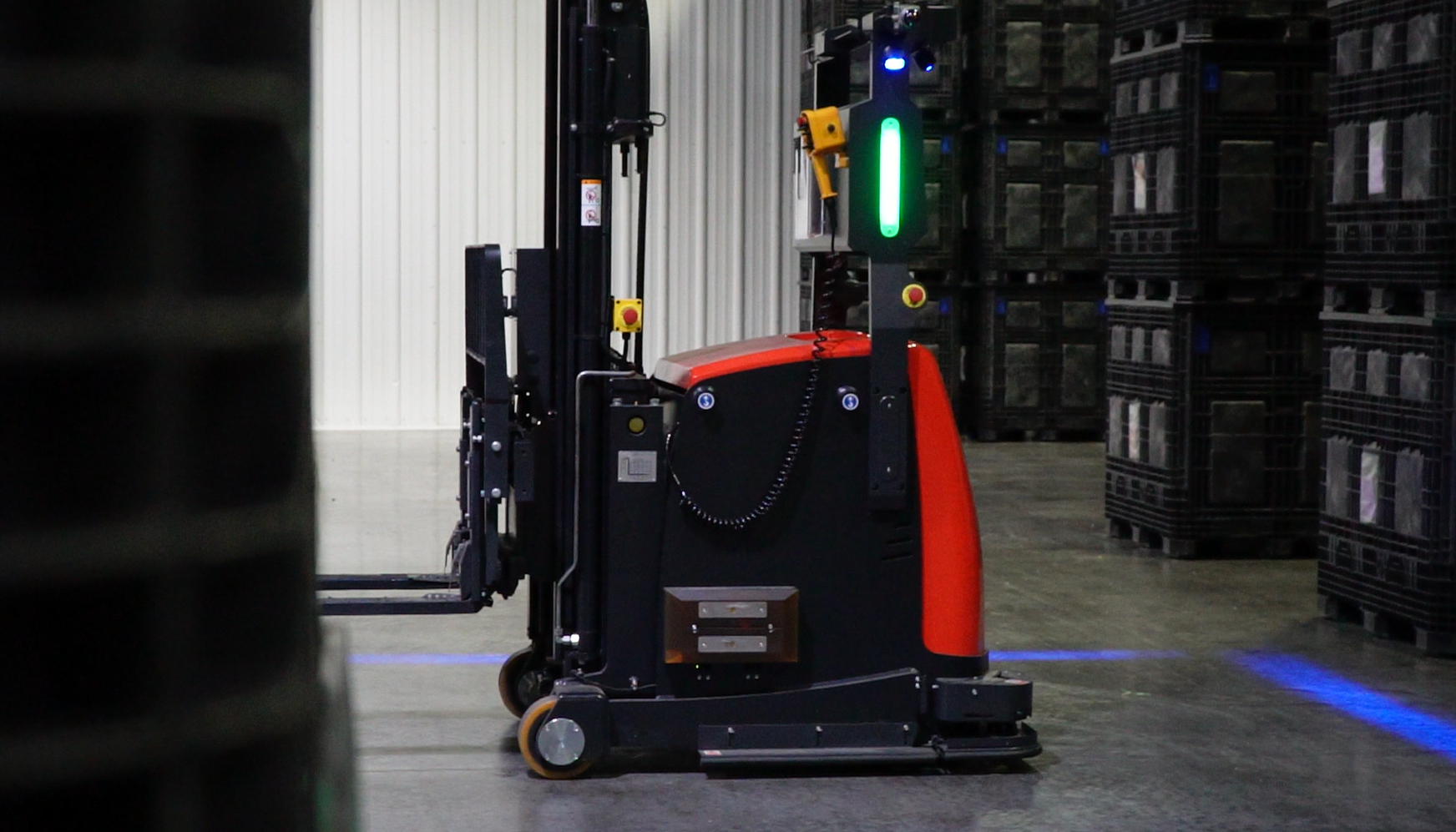

Not every load in a manufacturing facility or warehouse arrives on a standardized pallet. From automotive cages and custom metal racks to oversized containers and irregularly positioned loads, real-world material handling is often more complex than a simple pallet pickup.
For manufacturers considering automation, this brings to mind an important question: Can automated guided vehicles (AGVs) handle the same variety of loads as conventional forklifts?
The answer is yes, if the technology is tailored to the application.
Modern AGVs and autonomous forklifts can handle a wide range of load types, including nonstandard pallets, industrial cages, and specialized carriers. Even so, successful automation requires more than sufficient payload capacity. It depends on advanced perception, positioning accuracy, handling equipment, and on occasion - application-specific engineering.
Understanding these capabilities help manufacturers evaluate automation opportunities without unnecessarily redesigning existing workflows.
Traditional AGV applications often rely on predictable conditions: standardized pallets, fixed pickup locations, and predefined routes.
While effective for repetitive transportation, this approach can become challenging when facilities handle different load types or inconsistent carrier positions.
Common challenges include:
Different pallet dimensions: Multiple pallet sizes, heights, and fork pocket configurations.
Inconsistent positioning: Loads placed at varying angles or slightly outside designated pickup locations.
Specialized carriers: Automotive cages, metal racks, bins, ropaks, and custom containers.
Variable load geometry: Irregular shapes, overhanging products, or uneven weight distribution.
Precision stacking: Applications requiring accurate alignment across multiple storage levels.
For manufacturers, the key question is whether an AGV can detect and accommodate these variations while maintaining reliable operation.
Advances in machine vision, autonomous navigation, and sensor technology have expanded the range of materials AGVs can handle.
Rather than relying exclusively on fixed pickup coordinates, advanced autonomous forklifts can identify load positions and make adjustments within defined operating tolerances.
Autonomous forklifts may use cameras, 2D and 3D LiDAR, and other sensors to identify load locations, dimensions, and positioning deviations.
These technologies can help vehicles detect fork entry points, determine carrier orientation, and identify obstacles around handling areas.For example, when a pallet is positioned slightly off-center, a perception-enabled forklift may detect the deviation and adjust its approach before pickup.
This reduces dependence on perfectly repeatable load placement, although detection performance still depends on carrier geometry and environmental conditions.
Detecting a misaligned load is only part of the process. The vehicle must also adjust its approach.
Advanced AGVs can use perception data to calculate positioning corrections, including changes to approach angle, fork height, or vehicle position. This is particularly valuable for manufacturing environments where pallets and specialized carriers are not always placed in identical locations.
Correction capabilities vary by vehicle, so manufacturers should verify that their expected load variability falls within the system's operating tolerances.
Some manufacturing loads require more than conventional forklift forks.
Autonomous forklifts can be configured with specialized handling equipment (such as AGV clamps) for applications involving oversized goods, industrial cages, custom racks, or multiple loads.
The appropriate configuration depends on carrier dimensions, weight distribution, load center, and required handling movements.
These options can help manufacturers automate existing workflows without replacing every carrier with a standardized pallet.
Stacking nonstandard loads introduces additional challenges involving alignment, stability, and placement accuracy.
Advanced autonomous forklifts can incorporate machine vision and intelligent verification systems to assess load alignment before completing a stacking operation.
Some systems also support automated retry functions when placement does not meet defined requirements.
These capabilities are especially valuable in automotive manufacturing, where specialized metal cages may need to be stacked across multiple levels.
Modern AGVs can support a variety of carriers, depending on vehicle configuration and application requirements.
| Load type | Common application | Key considerations |
|---|---|---|
| Wooden pallets | Warehouse and production transport | Pallet condition, fork entry |
| Plastic pallets | Food, beverage, pharmaceuticals | Geometry, deflection |
| Oversized pallets | Industrial manufacturing | Capacity, load center |
| Automotive cages | Parts manufacturing | Alignment, stacking stability |
| Custom metal racks | Industrial components | Pickup geometry, attachments |
| Bins and containers | Production line feeding | Dimensions, positioning |
| Drums and cylindrical loads | Chemical and industrial applications | Load restraint, specialized handling |
Not every AGV can handle every load type. Compatibility should be evaluated using actual production carriers.
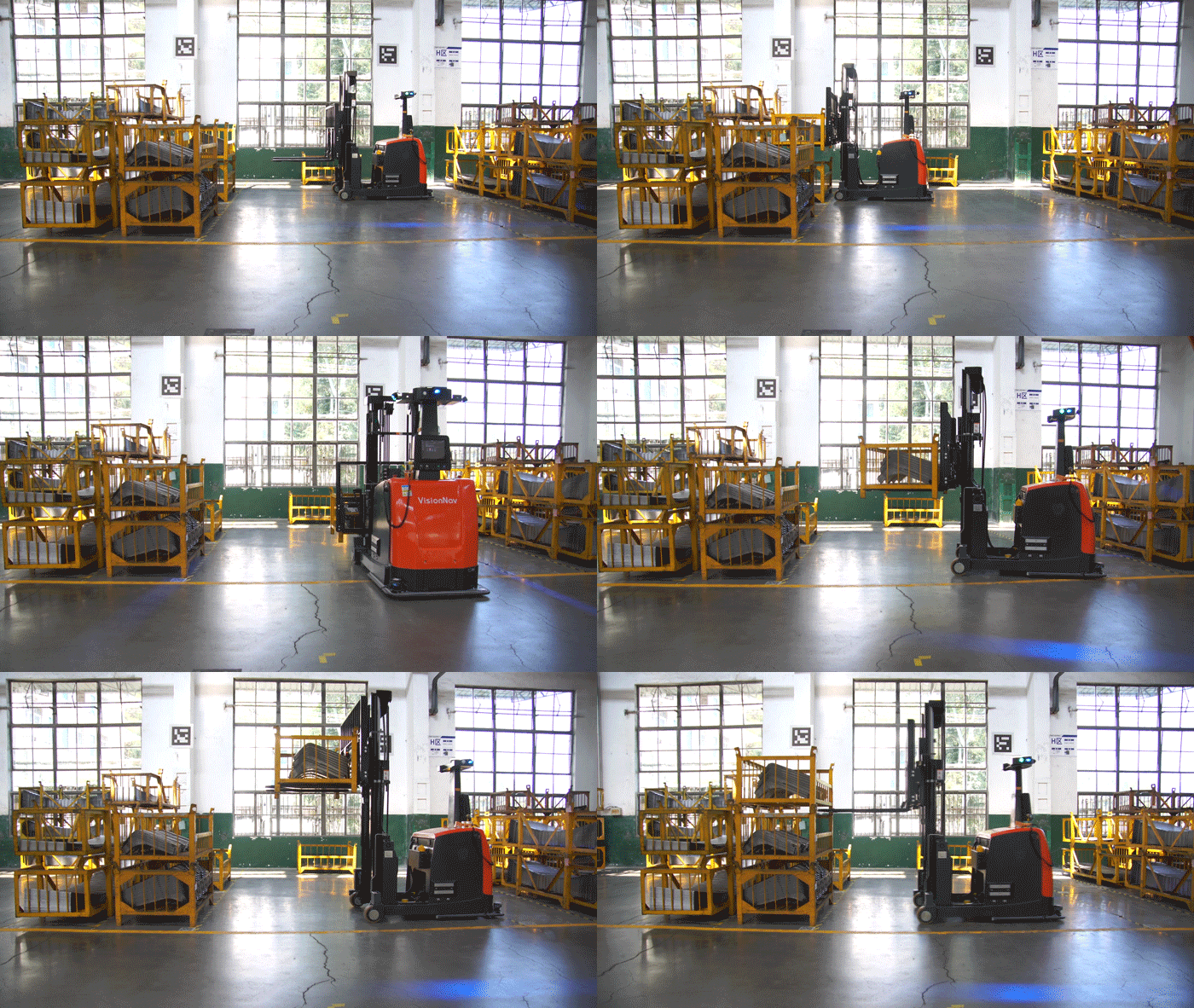
Automotive manufacturing presents unique challenges for autonomous material handling.
Components are frequently transported in specialized metal cages rather than conventional pallets. These carriers may vary in height, dimensions, and handling requirements.
Beyond transportation, facilities may need to stack loaded cages, retrieve empty containers, and circulate carriers between production and storage areas.
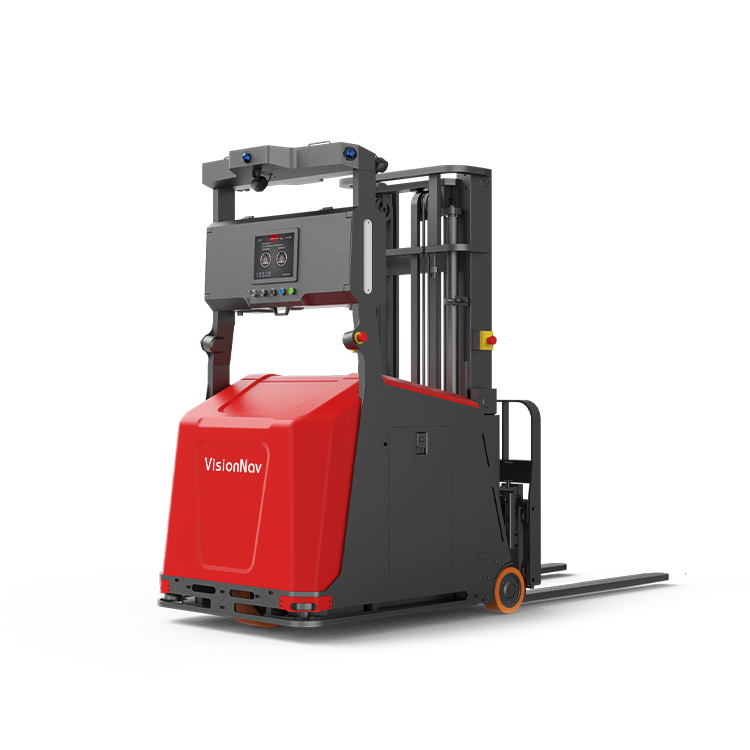
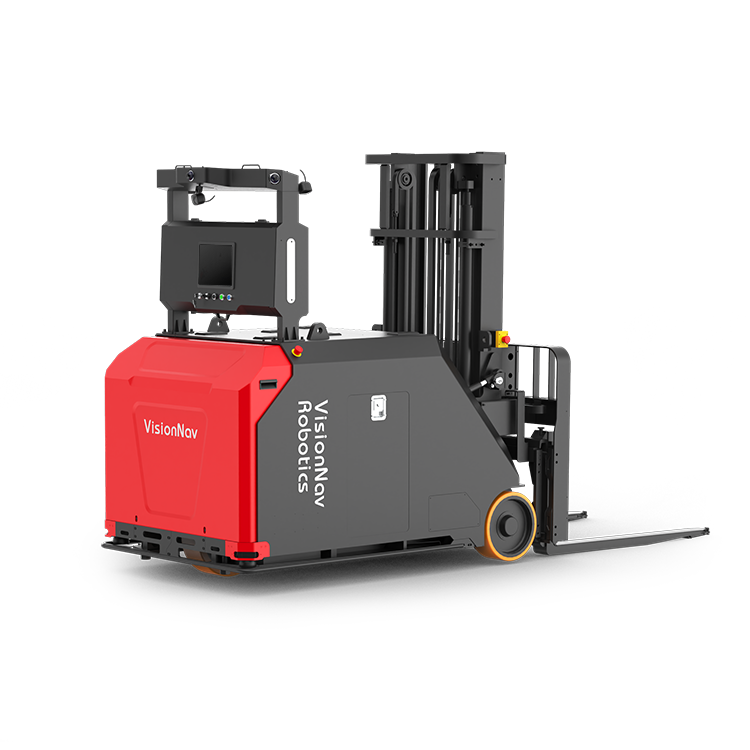
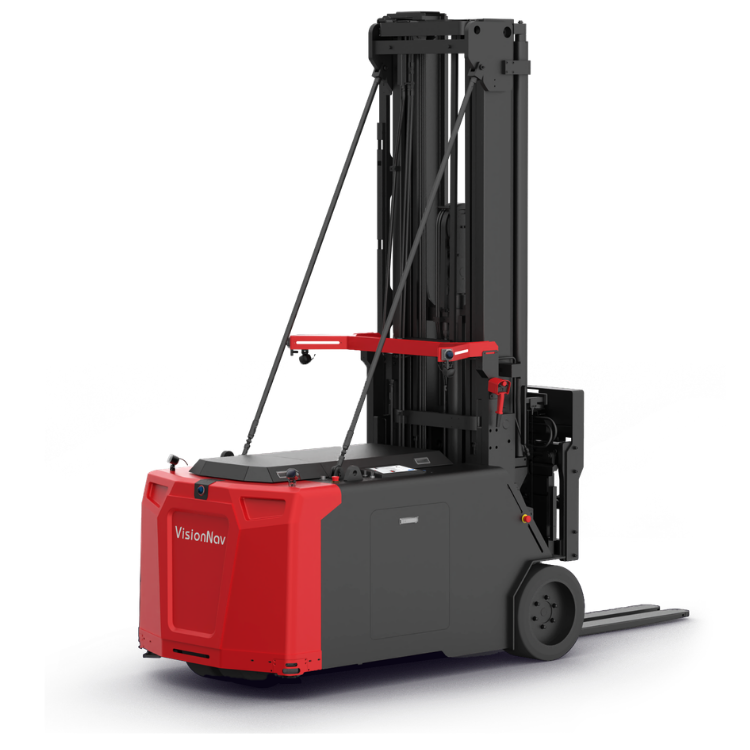
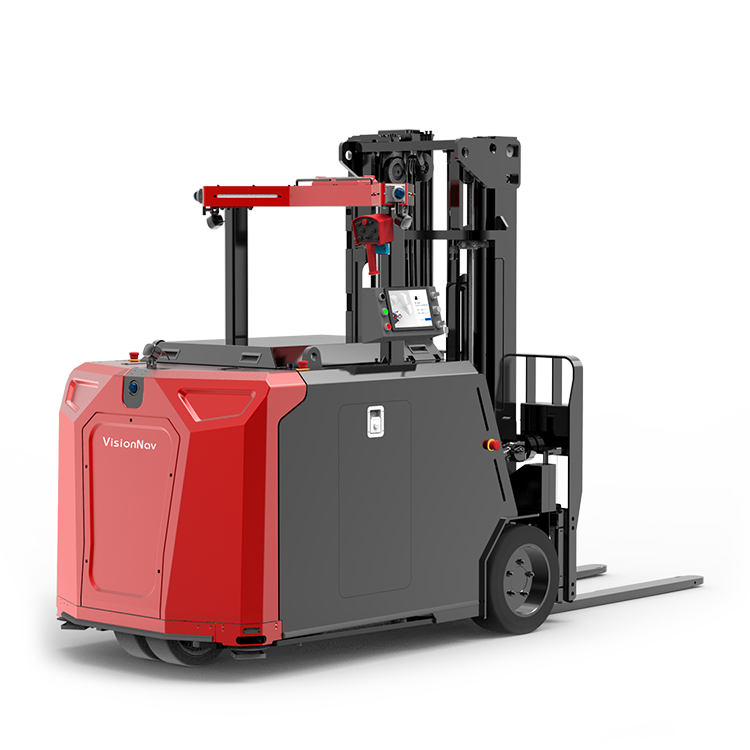
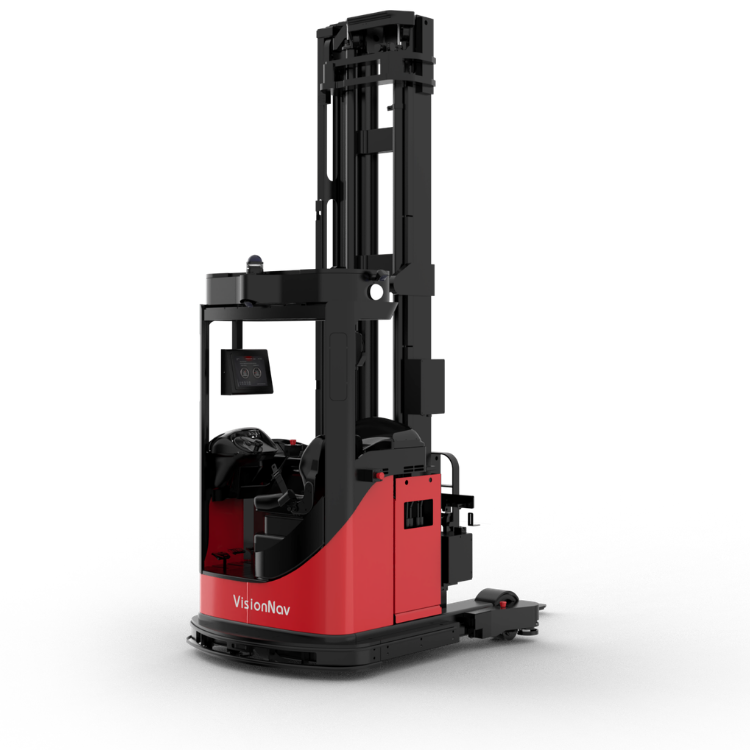
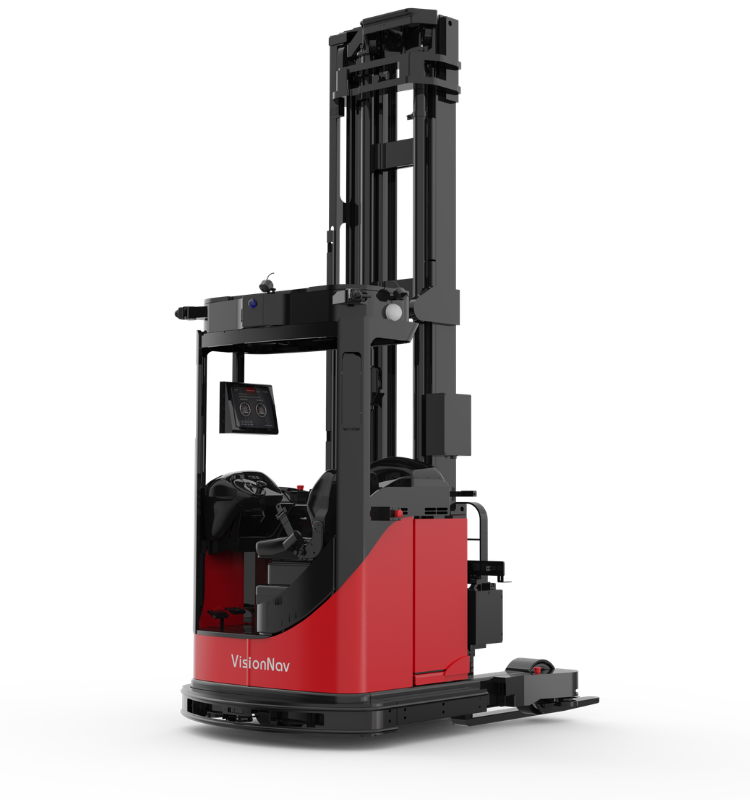
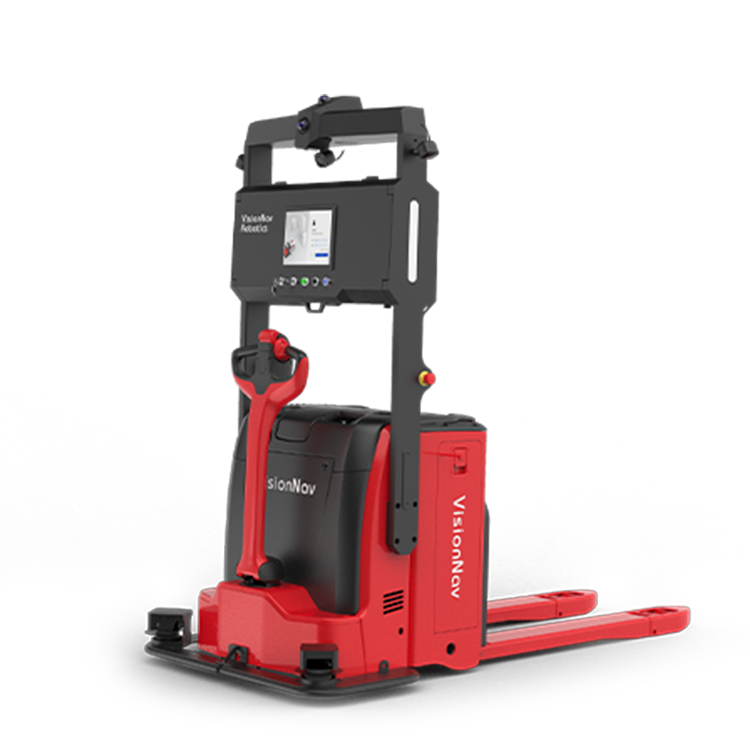
In one automotive parts manufacturing application, VisionNav Robotics deployed its VNP15 autonomous counterbalance stacker to automate:
Finished goods cage transportation
Four-layer cage stacking
Empty cage destacking
Material circulation
The solution incorporated machine vision and deep learning-based stacking verification to assess cage alignment before placement.
Precision servo lift control and automated retry capabilities supported accurate stacking operations.
This application demonstrates how autonomous forklifts can extend beyond conventional pallet transportation to automate specialized manufacturing workflows.
Watch the Automotive Cage Stacking Demonstration
One common concern among manufacturers is whether every pallet or carrier must be positioned at exactly the same location.
While traditional systems may require precise placement, advanced autonomous forklifts can accommodate certain positioning deviations through perception and intelligent correction.
For example, a vehicle will detect a pallet placed at a slight angle and adjust its approach before inserting the forks.
That being said, correction capabilities are not unlimited. Severely damaged pallets, obstructed fork pockets, unstable loads, or carriers outside the vehicle's operating tolerances may still require intervention. Properly configured AGVs/AMRs will be able to detect this issue and alert an operator that manual assistance is needed.
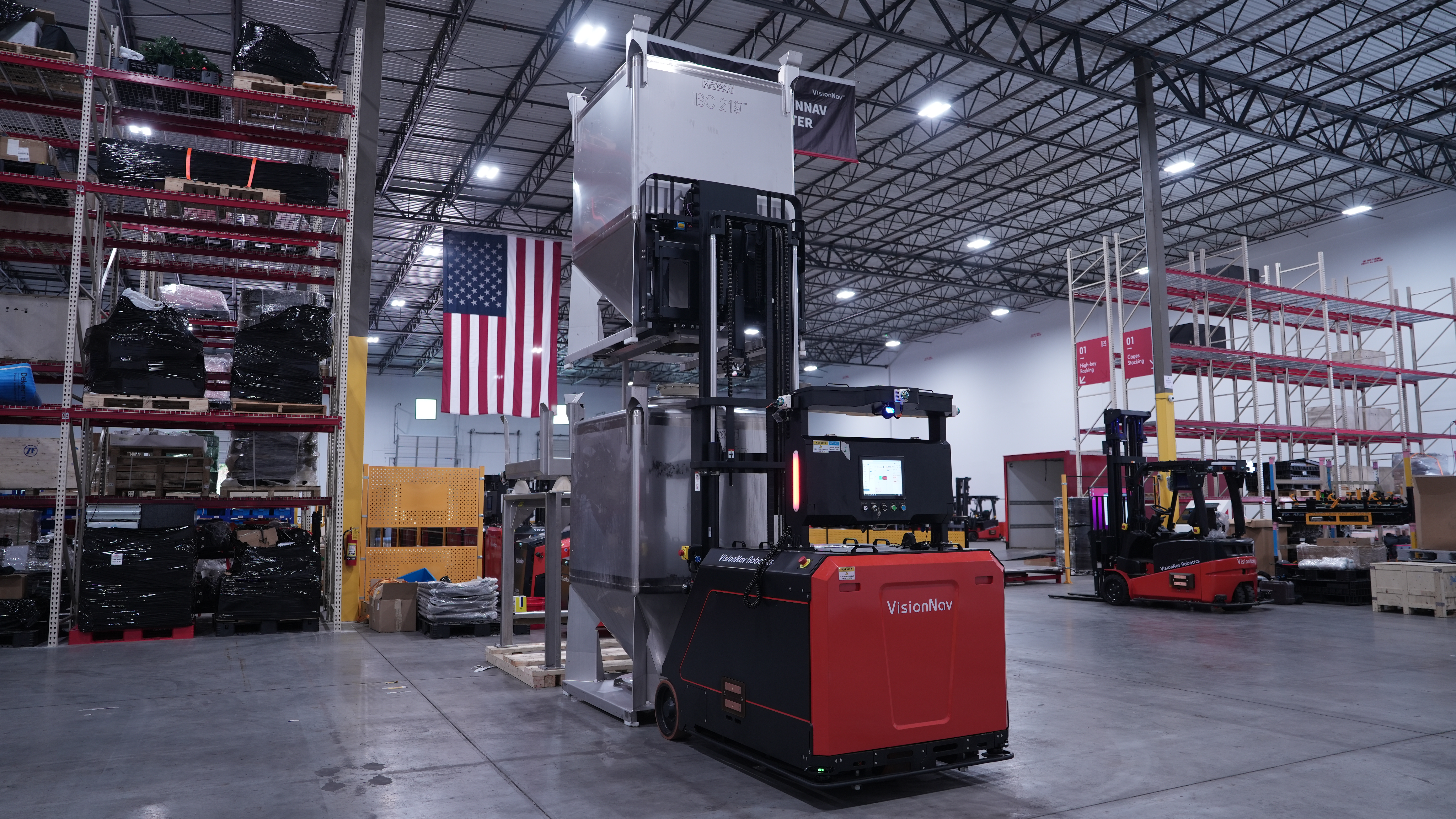
When evaluating AGV pallet handling for mixed pallets, cages, or custom carriers, manufacturers should consider several factors.
1. Load dimensions and weight
Document the full range of carrier sizes, weights, and load centers, including empty and loaded configurations.
2. Carrier geometry and condition
Evaluate fork entry points, pallet construction, cage bases, and potential obstructions that could affect handling.
3. Positioning variability
Determine how consistently loads are placed and whether the AGV can accommodate expected deviations.
4. Required handling precision
Transporting pallets horizontally requires different capabilities than stacking metal cages multiple levels high.
5. Facility conditions
Consider aisle widths, floor conditions, lighting, traffic patterns, and available maneuvering space.
6. System integration
Determine how the AGV will identify different load types and receive handling instructions from warehouse or production systems.
7. Real-world testing
Test the proposed solution using actual production carriers and realistic operating conditions.
A demonstration with standardized pallets may not accurately represent a facility handling mixed cages, specialized racks, or irregular loads.
Standardization can simplify automation, but it is not always necessary.
For some operations, consistent pallet types and designated pickup locations improve repeatability and reduce implementation complexity.
However, replacing existing carriers or redesigning established workflows can introduce additional costs.
Modern autonomous forklifts offer greater flexibility through perception-based detection, positioning correction, and specialized handling configurations.
The goal should be to identify which variations the technology can accommodate and where targeted process improvements would provide additional value.
Successful automation usually doesn't require changing the way materials are handled. It requires selecting technology capable of meeting the application's actual requirements.
Manufacturing and warehouse environments rarely operate under perfectly standardized conditions. Different pallet types, specialized carriers, variable positioning, and complex stacking requirements all influence how automation must be designed.
VisionNav Robotics develops autonomous material handling solutions for applications extending beyond conventional pallet transportation. Through advanced perception, precision positioning, intelligent load verification, and application-specific engineering, VisionNav solutions support complex workflows, including automotive cage handling, multi-layer stacking, and specialized carrier transportation.
At VisionNav's demonstration centers, manufacturers can evaluate potential automation applications using their own load carriers and operating requirements.This approach helps validate technical feasibility and identify challenges before deployment.
Advances in machine vision, sensor fusion, positioning correction, and specialized handling technologies have expanded the range of applications suitable for automation.From nonstandard pallets to automotive cages and multi-layer stacking, modern AGVs can support increasingly complex material handling workflows.
The best way to determine whether an AGV can handle your loads is to test it with the materials you actually use.
See Your Loads in Action at a VisionNav Demo Center.
Every material handling application is different. VisionNav works with manufacturers to evaluate real-world automation requirements, including specialized carriers, variable load dimensions, and complex workflows. Bring your pallets, cages, or custom carriers to a VisionNav demonstration and explore how autonomous material handling could work in your facility.
Can AGVs handle different pallet sizes?
Yes. Some AGVs and autonomous forklifts can handle multiple pallet sizes, depending on vehicle capacity, fork configuration, and load detection capabilities.
Can autonomous forklifts pick up misaligned pallets?
Advanced autonomous forklifts equipped with perception and positioning correction technologies can accommodate certain positioning deviations within defined operating tolerances.
Can AGVs stack industrial metal cages?
Yes. Autonomous forklifts designed for precision stacking can support industrial cage stacking and destacking, depending on carrier geometry, stability, and vehicle capabilities.
Do AGVs require standardized pallets?
Not always. Advanced AGVs can be configured for different pallet types and specialized carriers, although standardization may simplify implementation.
Can one AGV handle multiple load types?
Some autonomous forklifts can handle multiple carrier types through configurable handling parameters, perception systems, and specialized attachments. Compatibility should be validated for each application.